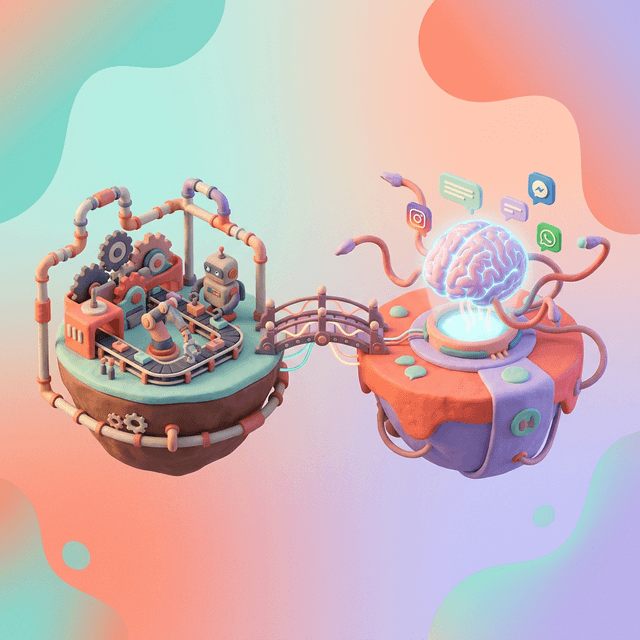

Imagine a tiny crew of pirates out-maneuvering a massive royal galleon. No, they aren't rowing faster—they have an autonomous wind-mapping system charting their course.
What is a 20x Company?
Several years ago, Parker Conrad (founder of Rippling) coined the term compound startup—a theory that businesses can capture a more powerful product-market fit by building multiple integrated applications in parallel.
"Right now, the best teams aren't automating one or two internal functions. They're automating all of them. Their leanness is their superpower." 1 — Garry Tan, Y Combinator
By embedding hyper-efficient AI into their DNA, lean teams postpone the heavy drag of hiring. This keeps payroll anchored low, prevents company culture from drifting out to sea, and makes each team member exponentially more powerful.
Three Approaches to Internal AI Automation
How exactly are startups architecting this kind of leverage? Let's look at three practical approaches successfully charted by YC founders.
1. The Autonomous AI Teammate
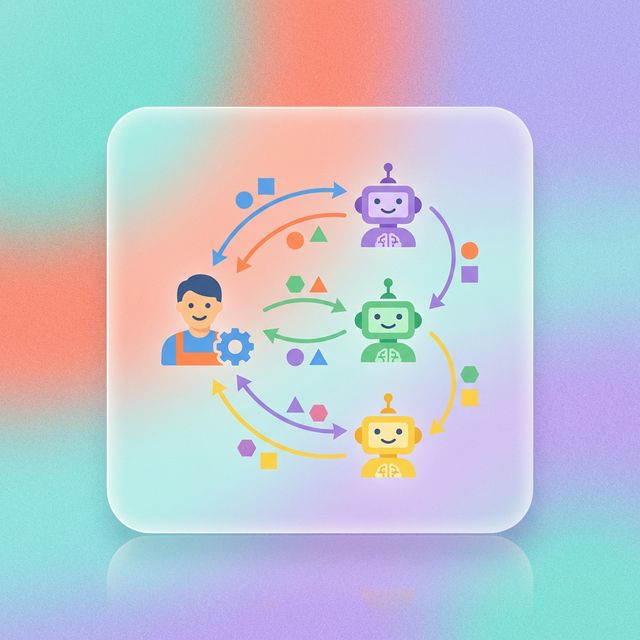
Rather than seeing AI as a glorified autocomplete, 20x companies treat AI as a full-time equivalent (FTE) employee capable of independent action.
2. The AI Source of Truth
As a company scales, crucial information gets lost in the chaotic sea of Slack channels, emails, and isolated databases. For an indie business, scattered context means lost time.
This internal dashboard is a single source of truth that pulls patient histories, scheduling, insurance codes, and communication logs instantly. Because this AI interface connects the dots behind the scenes, a single billing person, one support person, and one clinical lead can manage thousands of patients a month—a workload that traditionally demands three entire departments.
3. Custom Agents for Deep Workflows
Through this hyper-specific delegation, Phase Shift actually avoided hiring a design team entirely; the engineering team uses tools like Magic Patterns to handle all front-end UI generation themselves.
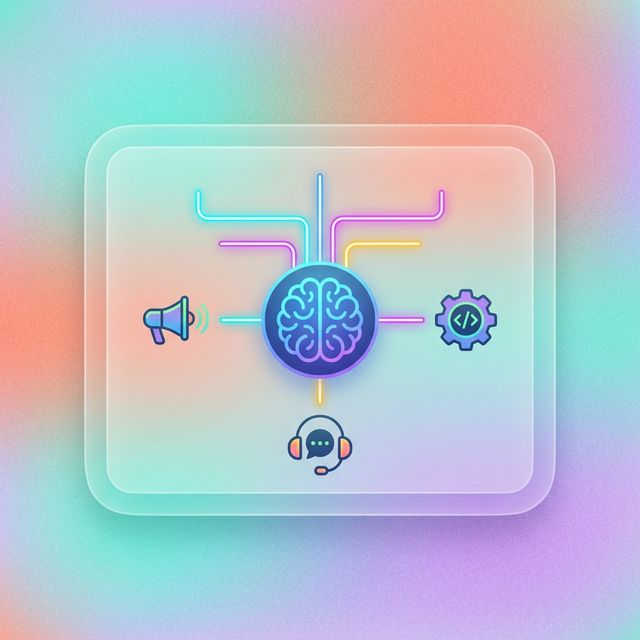
How Indie Hackers Can Become 20x Islanders
You don't need a venture-backed infrastructure to adopt the 20x company mindset. In fact, if you're a solopreneur coding from a café in Bali or a digital nomad designing in Lisbon, you are uniquely positioned to benefit from this shift.
Here’s your chart to navigate the transition:
- Audit Your Drift: Document every manual click, email, and copy-paste action you've performed this week. Identify the repetitive friction points holding back your momentum.
- Build Your Own Atlas: Leverage current tools like n8n, Make, or custom scripts interacting with the Claude or OpenAI APIs. Create a "shadow employee" that categorizes customer feedback, triages emails, or QA tests your code.
- Unify Your Dashboard: Stop treating AI as just a chat window. Integrate AI APIs into your own internal admin panels so you get instant context on your users automatically.
- Resist Premature Hiring: Every time you think "I need to hire a virtual assistant or a junior dev for this," pause. Ask yourself: Can I build a custom AI agent to handle 80% of this workload?
The Future Belongs to the Lean
The era of hiring massive headcount to solve scaling issues is slowly sinking. The new wave is internal AI automation.
Set your sails. It’s time to become a 20x company.
Ready to explore more strategies for building a location-independent business? Anchor down with other successful founders on Indie Island and join a community reshaping the future of work.
Tags
Stay updated
Get the next drop in your inbox
We only send thoughtful dispatches. Unsubscribe anytime.
Join the list