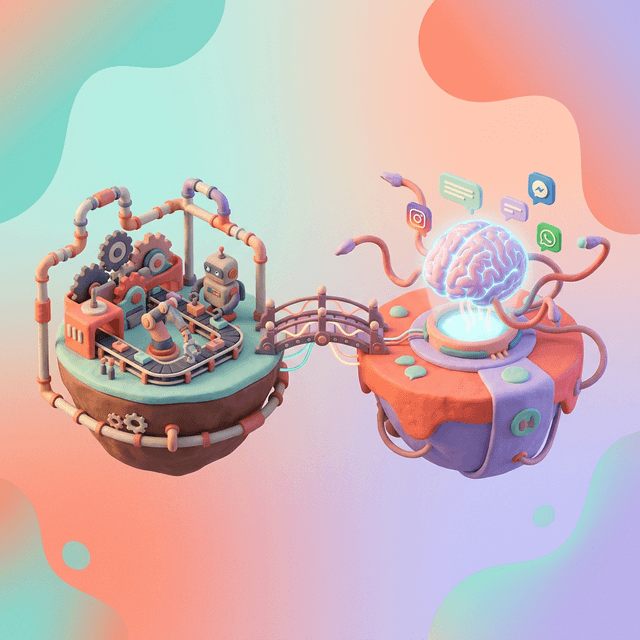

The crystal ball for 2026 is glowing, and it’s not showing us a uniform image of "working from a laptop on the beach."
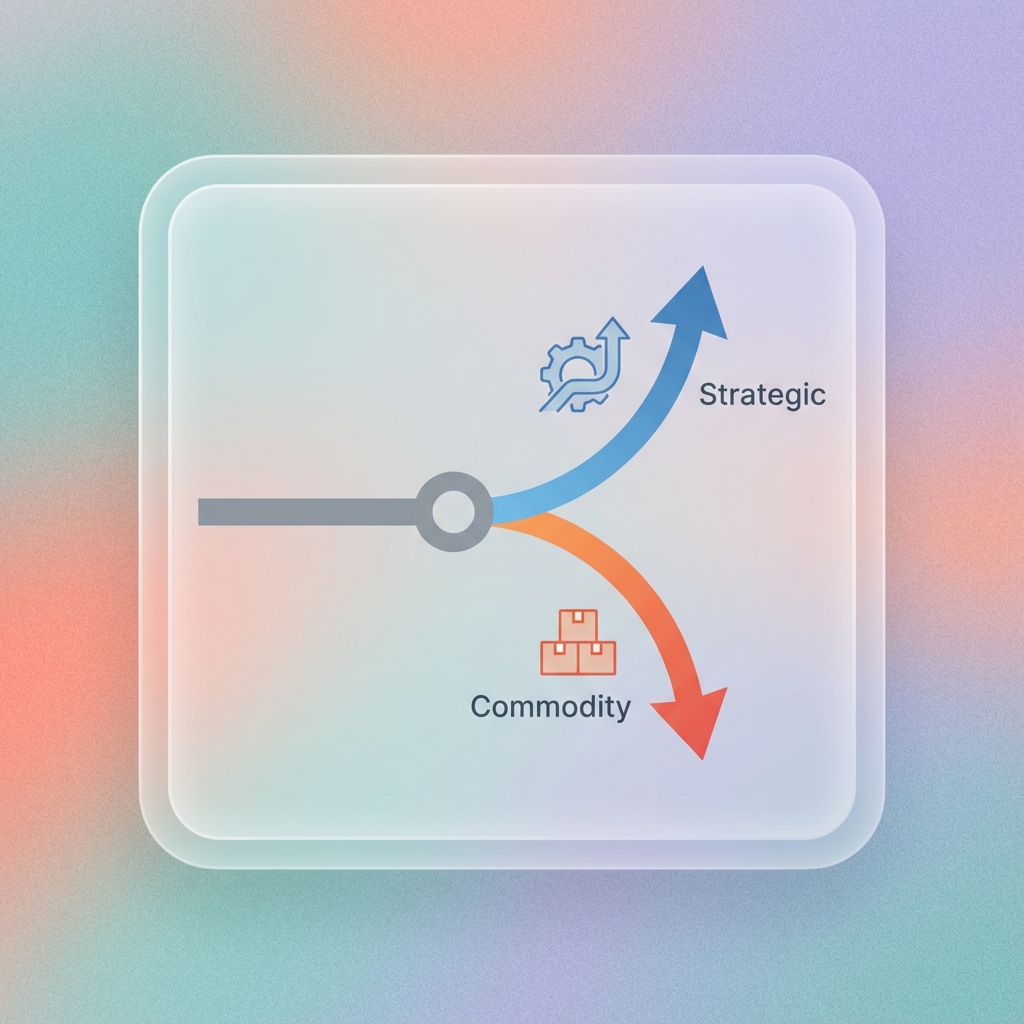
Instead, it’s showing a fork in the road.
If you are willing to learn and adapt, AI isn't your replacement—it's your superpowered lever. Here is how the market is evolving and how you can ride the wave instead of being crushed by it.
The Two-Tiered Nomad Economy
In the past (let's say, 2020-2024), you could sustain a nomadic lifestyle by arbitraging cost-of-living. You could earn a modest wage doing basic data entry, simple copywriting, or generic graphic design, and live like a king in Chiang Mai or Bali.
In 2026, that floor is collapsing.
AI tools—now functioning as "invisible co-founders"—have driven down the market value of commodity tasks. Why pay for a generic 500-word article when an LLM can do it in 5 seconds?
- The Commodity Tier: Fighting for scraps on gig platforms, competing directly with bots on speed and price.
- The Strategic Tier: The "Technomads" who use AI to deliver outcomes, not just outputs.
The demand for "AI-supported experts" is skyrocketing. Clients don't want someone who can just "write code" or "write words"—they want someone who can orchestrate AI tools to solve expensive business problems fast.
How AI "Leverages" the Adaptable
For the nomad who accepts the challenge to learn, AI effectively grants you a team of ten for the price of a subscription.
1. The Shift to "Intelligent Orchestration"
The most successful nomads in 2026 aren't just doing the work; they are directing it.
- Old Way: Spend 4 hours writing a blog post.
- New Way: Spend 30 minutes crafting a strategy and prompt chain, 10 minutes generating raw material, and 50 minutes refining, fact-checking, and injecting human voice.
- Result: You produce 4x the volume at higher quality, allowing you to charge for strategy rather than hours.
2. The "Invisible Co-Founder"
Living the nomad life involves a "shadow job" of logistics: visa research, tax compliance, travel booking, and time-zone math. New AI agents (like evolved versions of Reclaim.ai or specialized travel bots) are handling this friction.
- Prediction: By 2026, personal AI agents will handle 80% of your logistical admin. This buys you back the most precious asset of all: Deep Work time (or, let's be honest, more time to explore the island).
3. Hyper-Specialization via "Micro-Hubs"
The Survival Kit for 2026
- Curiosity > Coding: You don't necessarily need to be a software engineer. You need to be relentlessly curious about how tools can improve your workflow (check out our 2025 Tech Stack for a starting point).
- Humanity acts as a Premium: As content floods the web, trust becomes scarce. Your personal brand, your face on video, your authentic voice—these are things AI cannot forge.
- Outcome-Based Pricing: Stop selling hours. Use AI to deliver results faster, but price based on the value of that result. If you save a client $10,000 in a week using AI, don't charge them for 40 hours—charge them for the $10k value.
"Competitive advantage will belong to those that master the blend of autonomous systems and skilled human judgement." — Graig Paglieri, CEO of Randstad Digital
Conclusion: Adaptability is the New Stability
The "Technomad" isn't a cyborg; they are just a freelancer who stopped fighting the current and started building a boat. By letting AI handle the execution and the admin, you are free to be more human, more strategic, and more creative than ever before.
The market is waiting for those who can lead the machines. Will you be one of them?
Ready to showcase your adaptive portfolio? Join the Indie Island community and prove your value to the world.
Tags
Stay updated
Get the next drop in your inbox
We only send thoughtful dispatches. Unsubscribe anytime.
Join the list