In this article
You did it. You launched. You trended #1. You got the badge. You refreshed your analytics 400 times in 24 hours. The dopamine hit was glorious.
Then came Day 2.
The traffic cliff. The silence. The realization that you are now buried on Page 2 of the internet's "Newest Tools" feed.
Here is why your projects need a permanent home, not just a temporary stage.
The Problem with "Feed-Based" Fame
- The Stat: Most launches see a 90% traffic drop within 48 hours.
- The Reality: Feeds are great for discovery, but terrible for retention.
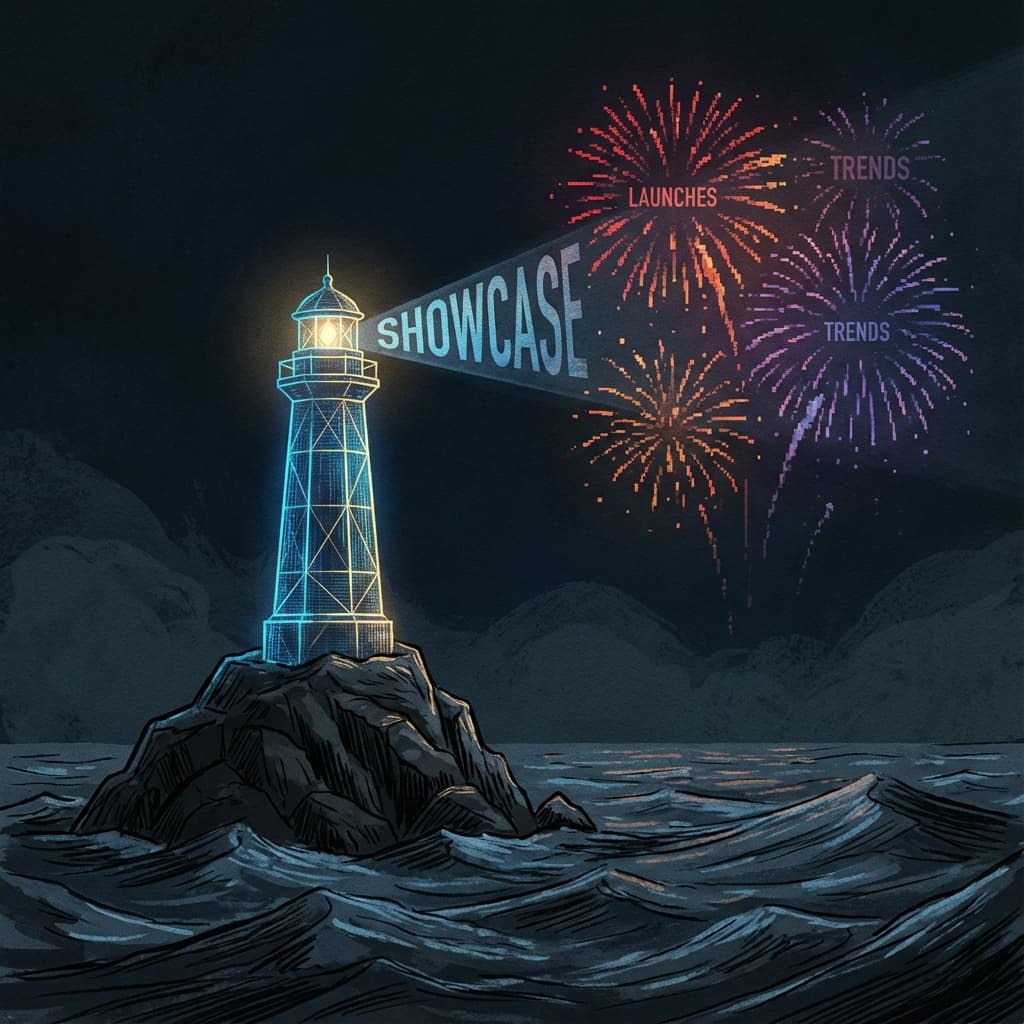
When your entire visibility strategy relies on "Being New," you are fighting a losing battle against entropy. You are treating your business like a firework—loud, bright, and gone. You need to build a lighthouse.
Products Die, Makers Survive
Maybe even your second.
If your identity is tied 100% to "Project A," and Project A dies, you start from zero. You lose the audience. You lose the trust.
But if you flip the script?
- Project A failed? Mark it "Sunsetted" on your profile and share the lesson.
- Project B is in beta? Link it up.
- Project C is your cash cow? Highlight it.
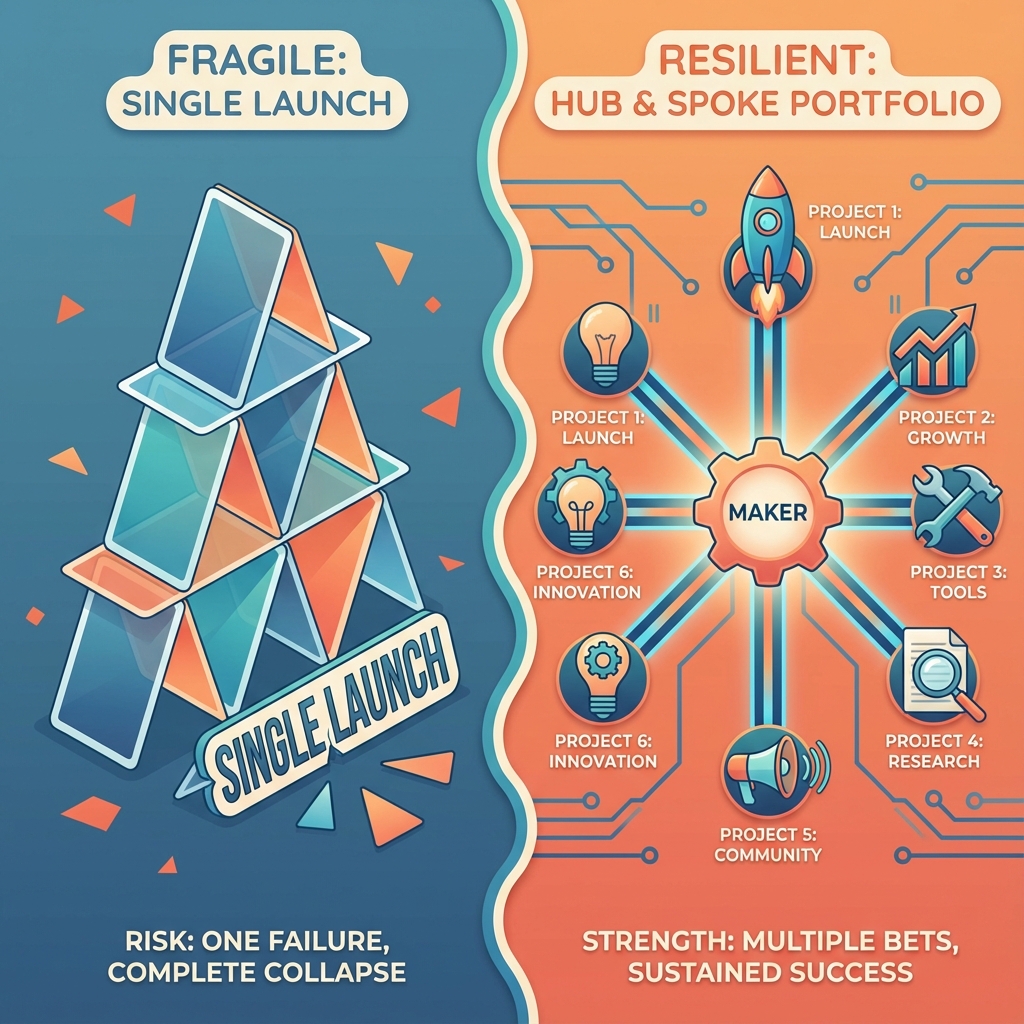
Expert Insight: "Audience first, product second." — Arvid Kahl. When you build a persistent showcase, you keep the audience even when the product changes.
4 Layers of a Perfect Indie Showcase
So, what does a "Forever Showcase" look like? It's not just a linktree. It needs depth.
1. The Stack (The "How")
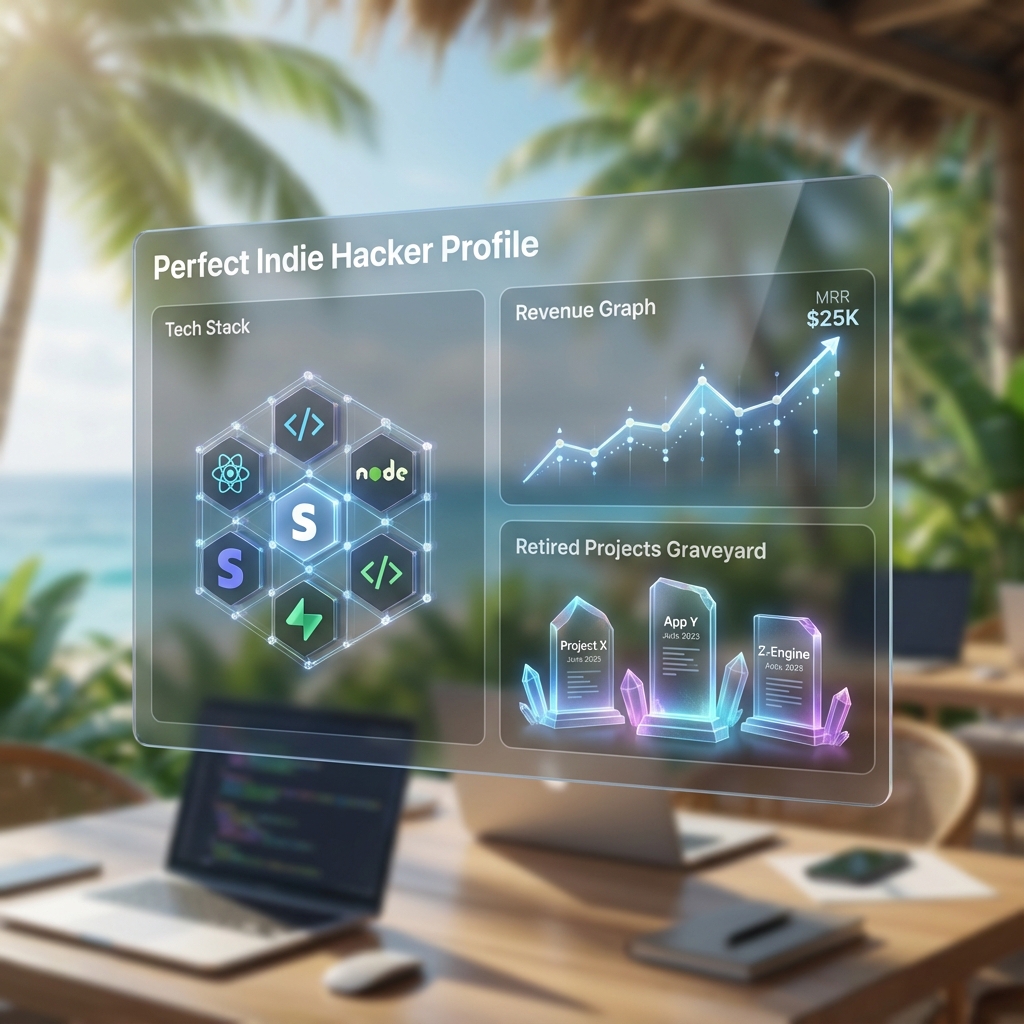
Indie hackers love looking under the hood. Don't just say "I built a CRM." Say "Built with Next.js, Supabase, and sleepless nights in a Tokyo capsule hotel." Sharing your tech stack signals competence to your peers.
2. The Metrics (The "Trust")
"Open Startups" win because transparency breeds trust. You don't need to share your bank login, but identifying if a project is "Pre-Revenue," "Ramen Profitable," or "Scaling" helps people frame your advice.
3. The Context (The "Story")
Where were you when you built this?
- "Coded this while stuck in quarantine in Bangkok."
- "Built this to solve my own problem with timezone math." Context creates connection. It turns code into a story.
4. The Graveyard (The "Resilience")
Don't hide your failures. Showcase them. A section called "Retired Projects" is a massive flex. It says: "I ship. I learn. I keep going."
Where to Anchor Your Work: The Ecosystem
You don't have to choose just one platform. You need an ecosystem strategy.
| Platform | Role | The Vibe |
|---|---|---|
| Product Hunt | The Party | Loud, crowded, fun for a night. Great for a spike. |
| Indie Hackers | The Watercooler | Peer support, advice, and commiseration. |
| Indie Island | The Home Base | Your persistent HQ. Connects your code to your location and your legacy. |
Why Indie Island?
We built Indie Island because we were tired of being "just a URL" on a list.
- It verifies you are a real human (essential in the AI era).
- It aggregates your "Passport" (where you've been) with your "Projects" (what you've built).
- It turns your "Graveyard" of failed projects into proof of experience.
Build Your Legacy, Not Just Your Launch
Stop letting your hard work disappear into the timeline abyss.
Launch on Product Hunt? Absolutely. Get that spike. Talk on Twitter? For sure. Get that engagement.
But anchor them all back to a place that you own. A place that tells the whole story.
Tags
Stay updated
Get the next drop in your inbox
We only send thoughtful dispatches. Unsubscribe anytime.
Join the list